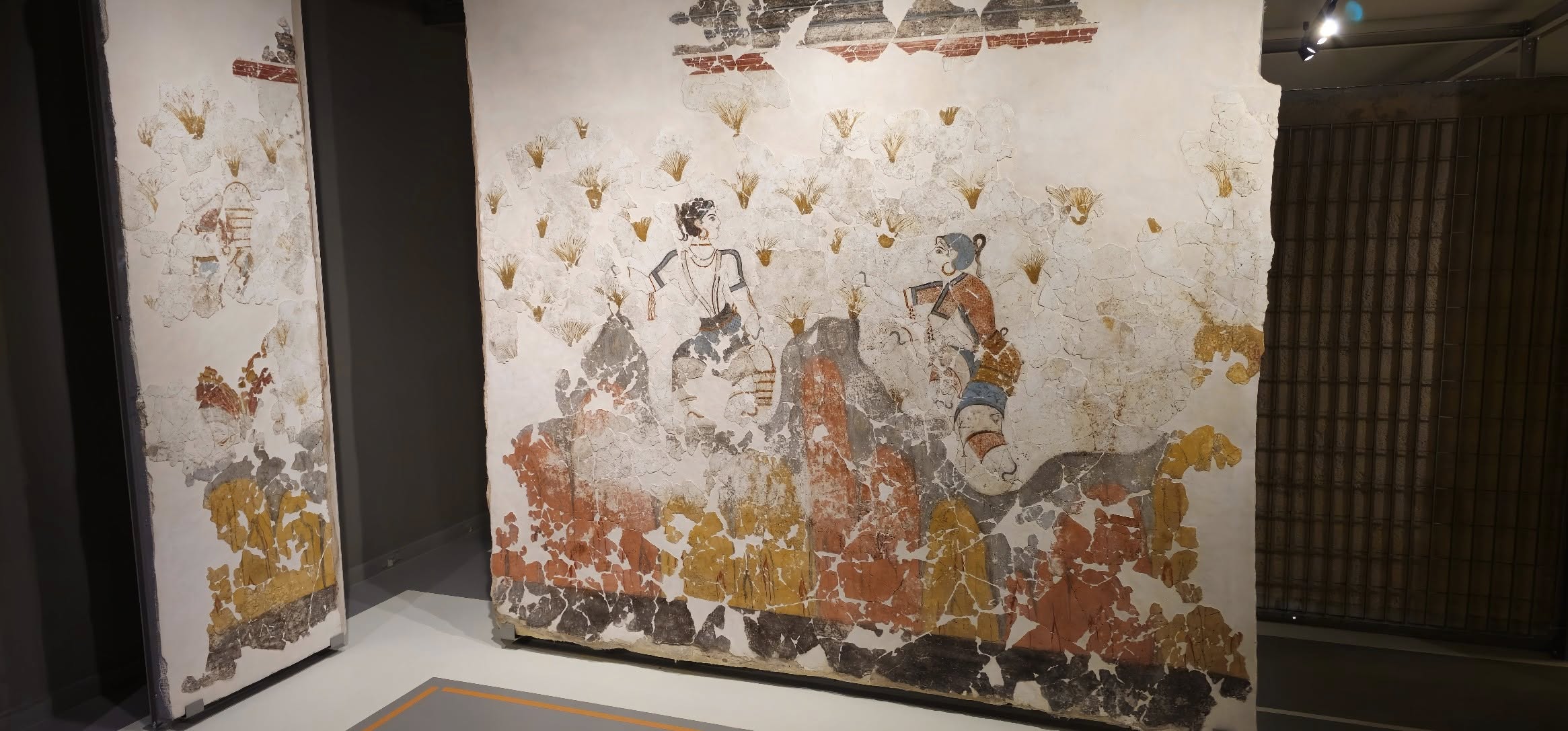

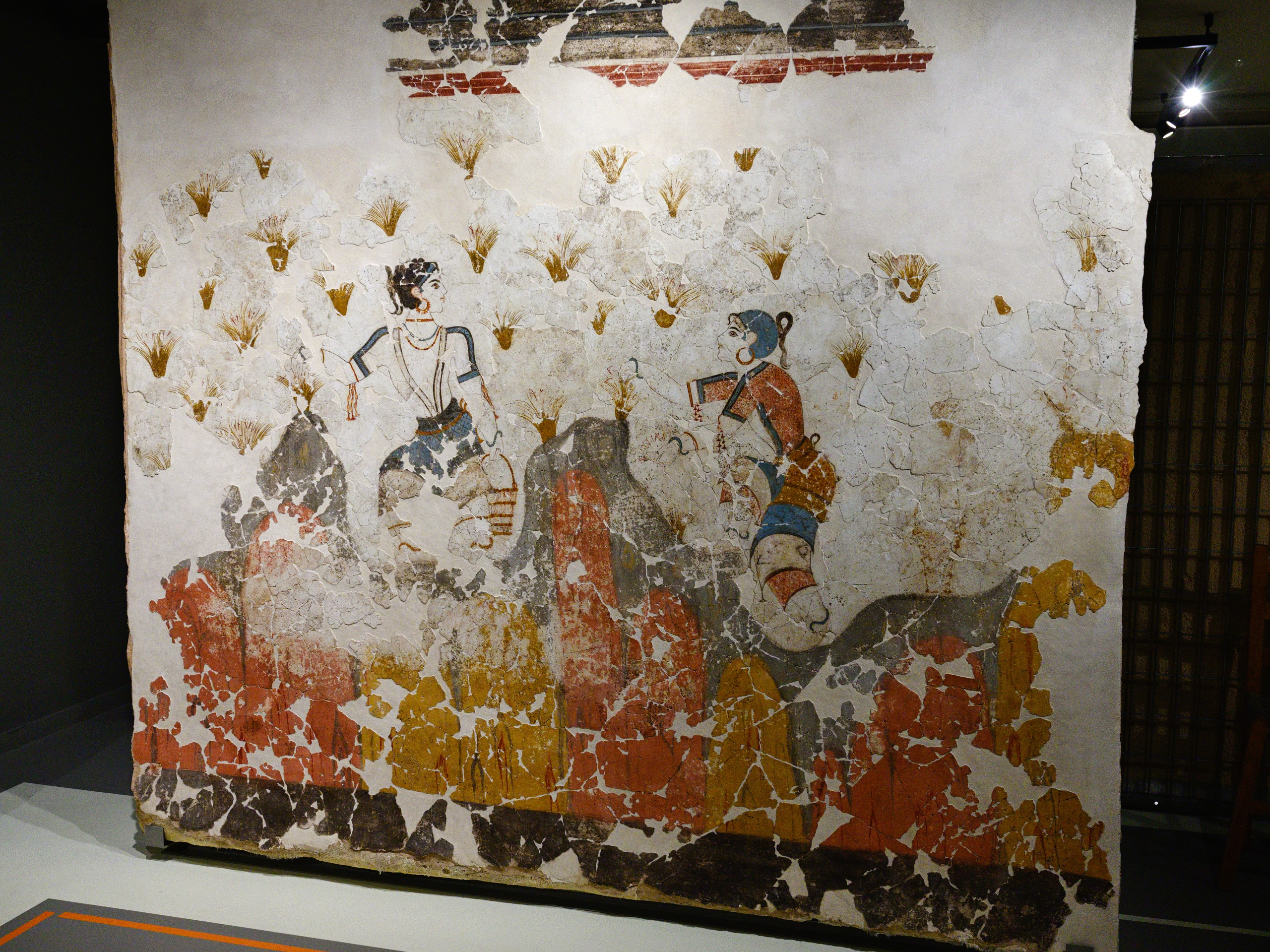
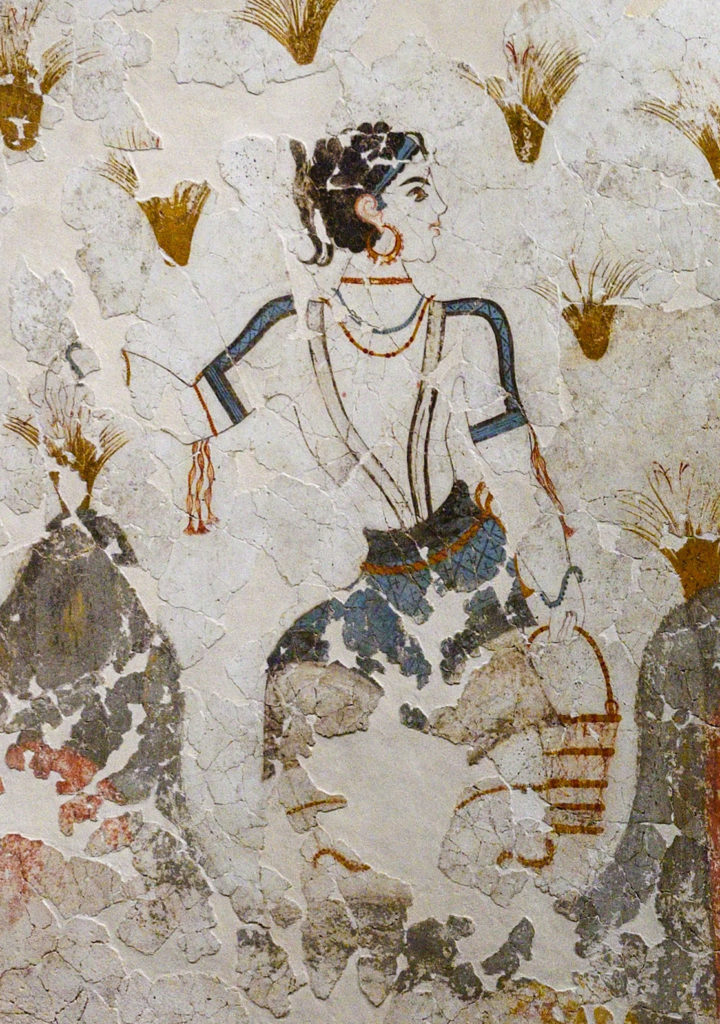
Find spot: Akrotiri, island of Thera (Santorini), Xeste 3, Room 3, 1st floor, east wall
Date: 17th century BCE (circa 1600–1550 BCE)
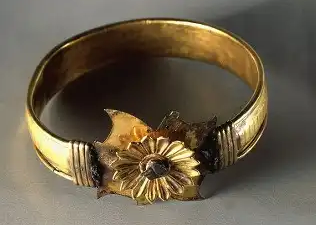
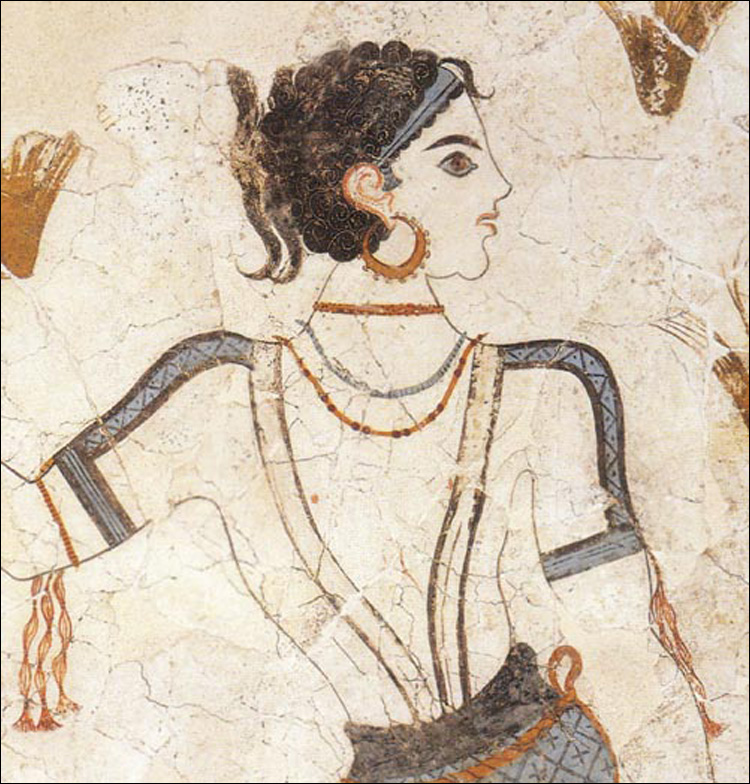
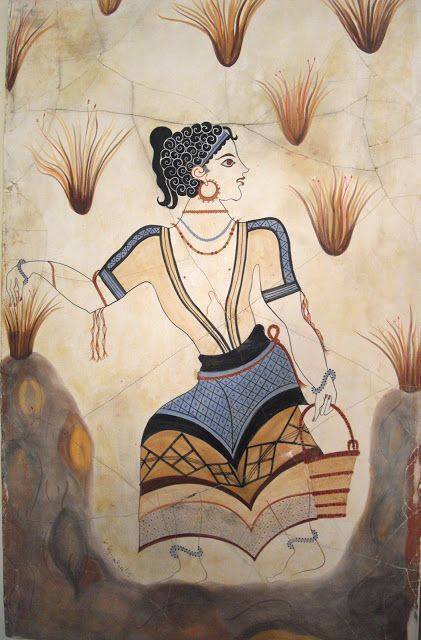
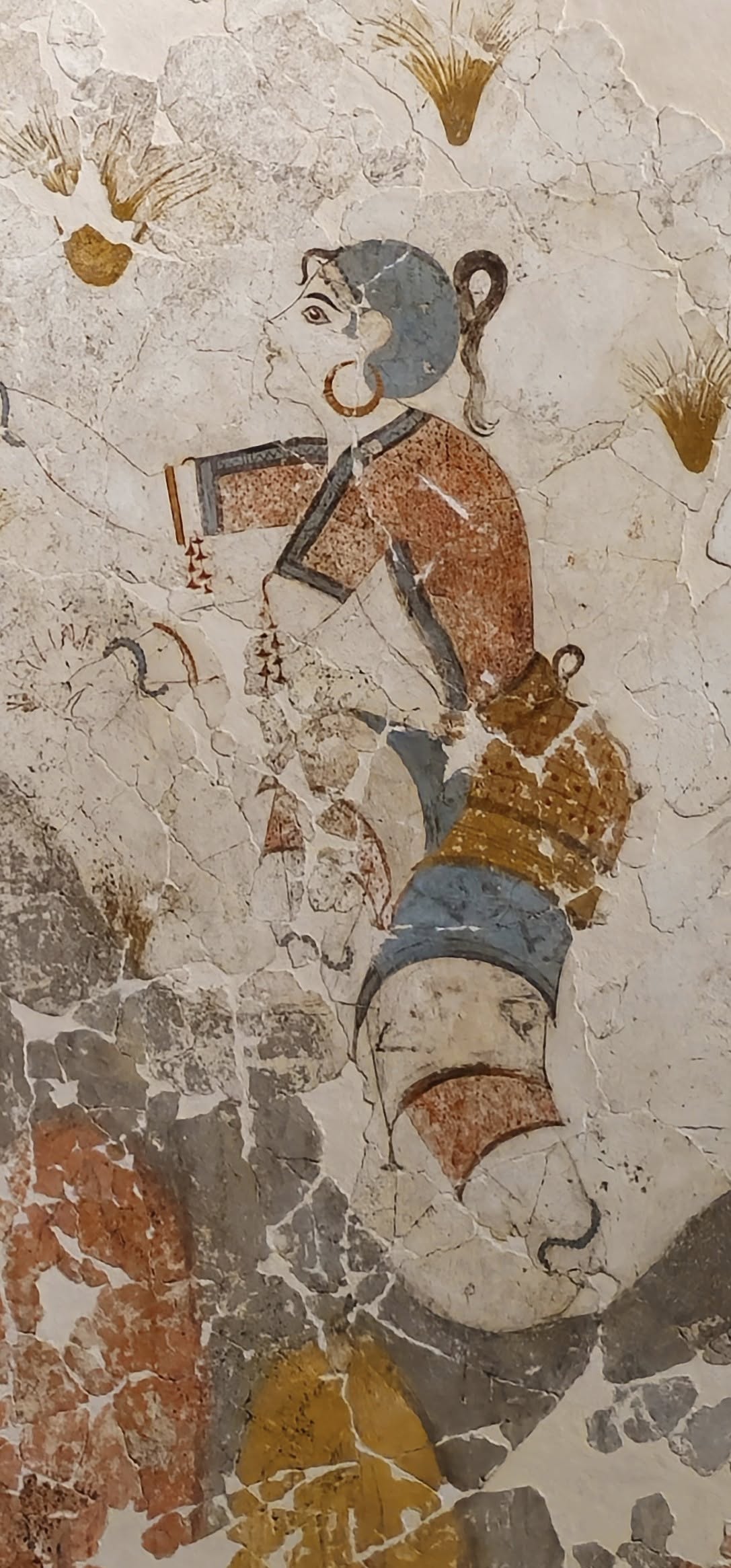
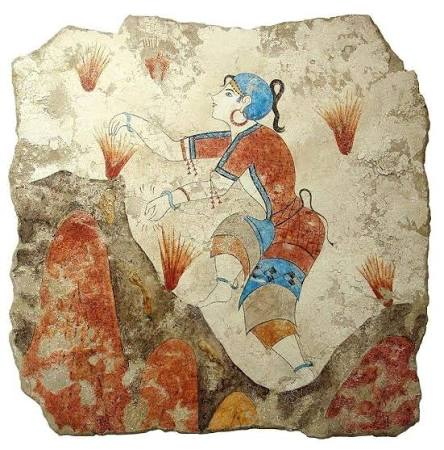
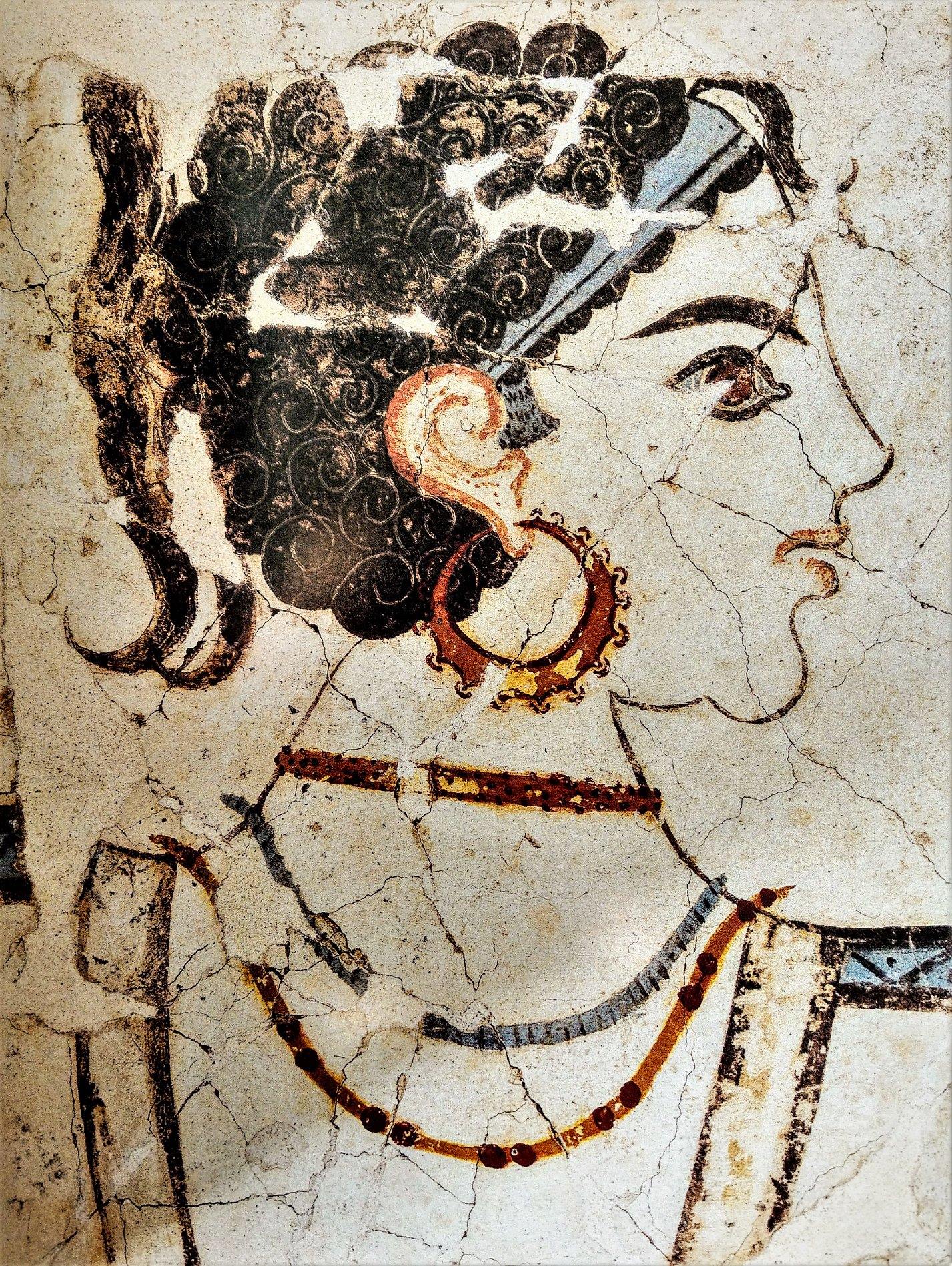
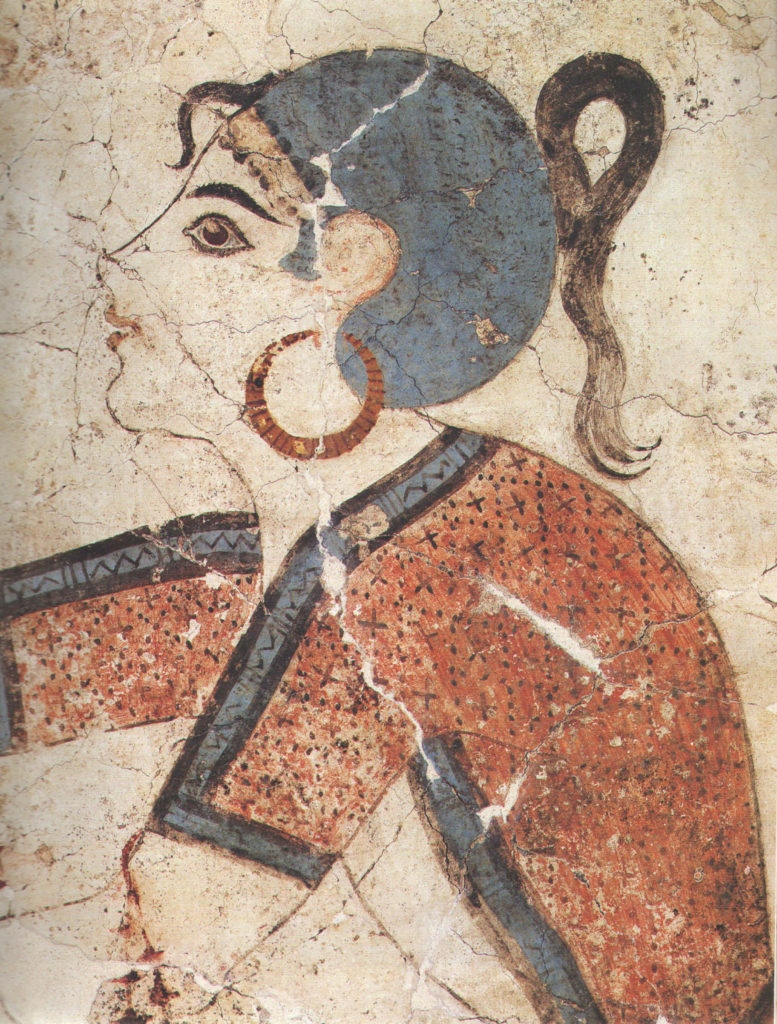
Clothing depicted: heanos, wrap skirt, earrings, necklaces, bracelets, anklets, fillet, belt, shaved head, basket
Museum link: Museum of Prehistoric Thira, Santorini https://www.namuseum.gr/en/collection/syllogi-archaiotiton-thiras/
Akrotiri was covered by volcanic debris following the eruption of the Thera volcano c. 1500 B. C. E.. This preserved many of the buildings and delicate wall paintings.
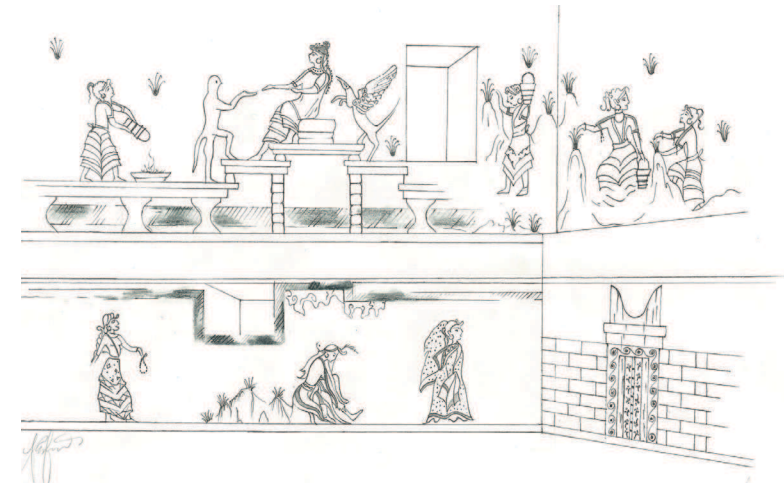
These frescoes occur in a house with a adyton (lustral basin) and although these frescoes are widely regarded as evidence of female initiation rites there is evidence that suggest that they may be decorative or might be figures from a mythical tradition.
The east wall of the first floor depicts two females are shown gathering saffron (crocus stamens). The gal on the right has a shaved head (indicated by the blue coloring) and a single tuft of longer hair. The gal on the left is a bit older but her hair has only just grown out except for one long lock in the back (which matches up with the long lock on the younger gal’s head). Both wear heanos, wrap skirts, earrings, bracelets and necklaces.
Sources:
“Thinking About Thera: A Re-interpretation of the Wall Paintings in Xeste 3” https://www.academia.edu/15525770/Thinking_About_Thera_A_Re_interpretation_of_the_Wall_Painting_in_Xeste_3
Ancient-Greece.org https://ancient-greece.org/art-architecture/akrotiri-frescoes/
Hatzaki, Eleni. “Pots, Frescoes, Textiles and People. The Social Life of Decorated Pottery at Late Bronze Age Knossos and Crete” (2018) https://www.academia.edu/88698664/Pots_Frescoes_Textiles_and_People_The_Social_Life_of_Decorated_Pottery_at_Late_Bronze_Age_Knossos_and_Crete.