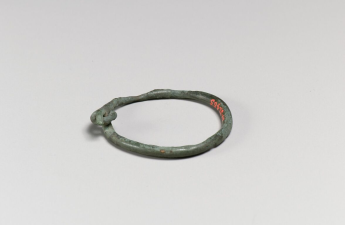
Find spot: Akrotiri, island of Thera (Santorini), Xesté 3, wall paintings from Room 3b, Ground FloorMuseum of Prehistoric Thera, Santorini https://www.namuseum.gr/en/collection/syllogi-archaiotiton-thiras/
Date: 17th century BCE (circa 1600–1550 BCE)
Clothing depicted: kilt (maybe),
Museum link:
Male figures presumed to be performing a rite of passage ceremony.
“The frescoes surrounding the lustral basin of Xestè 3, furthermore, depicting female figures of different ages and hairstyles and a sacred building surmounted by consecration horns (Fig. 5.1), led Marinatos to hypothesize that a female rite of passage would have taken place in this room (Marinatos 1984: 80- 84; 1993: 206-209). At the same time, Doumas (1987: 157-158) interpreted the wall paintings recovered in room 3b next to the lustral basin (Fig. 5.2) as the representation of a similar ceremony restricted to male individuals 3 .” – from “Rites of Passage in Minoan Palatial Crete and their Role in structuring a House Society” https://www.academia.edu/37937168/Rites_of_passage_in_Minoan_palatial_Crete_and_their_role_in_structuring_a_House_society
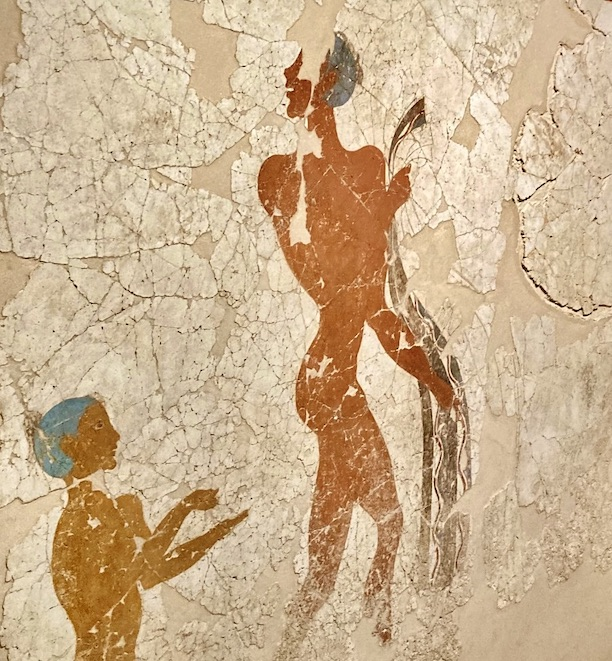

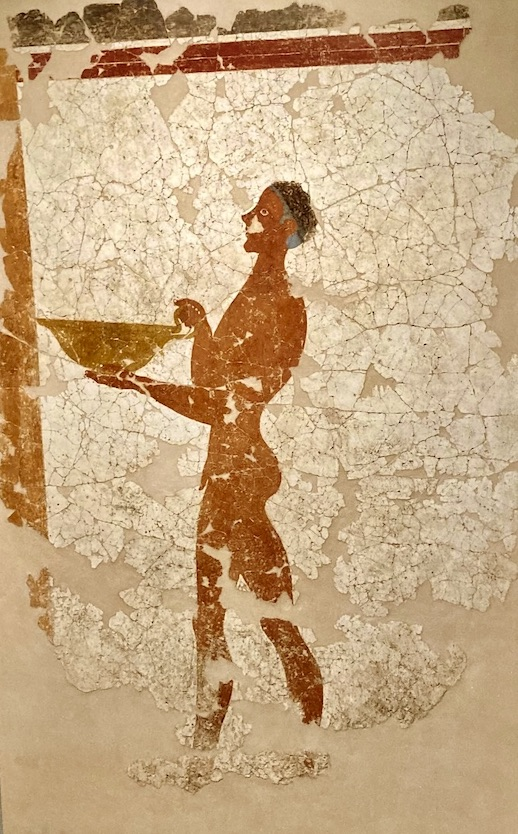
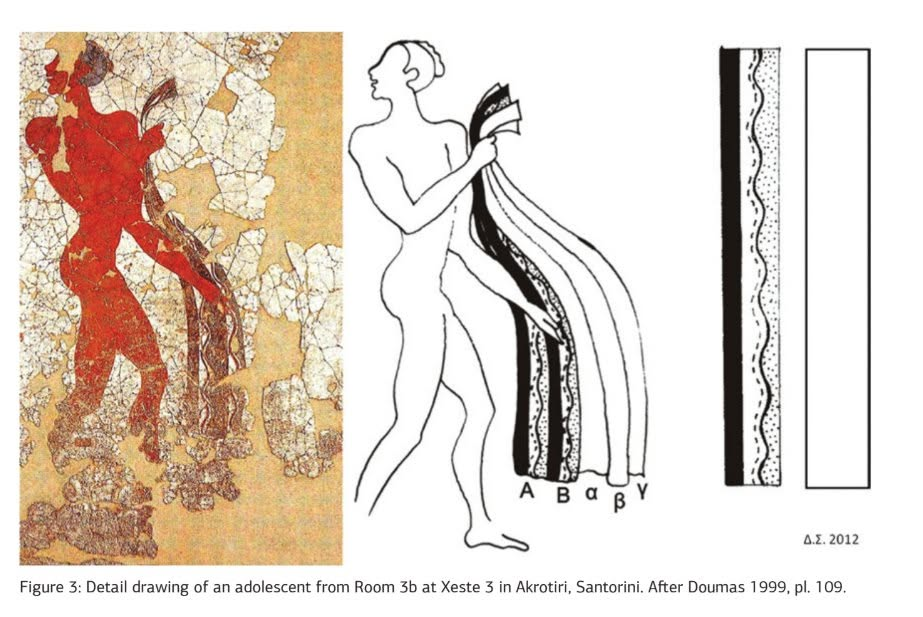
The article, “‘Put something on!’ Alternative ways of dressing and shapes of Minoan garments” from Arachne, Vol 5, 2018 suggests that the fabric in the adolescent’s hands is a Minoan man’s kilt.

A Pictorial the masters of Akrotiri https://popular-archaeology.com/article/a-pictorial-the-masters-of-akrotiri/
Ancient-Greece.org https://ancient-greece.org/art-architecture/akrotiri-frescoes/