Have you ever noticed that when you start gathering together images as “proof” of whatever historical things you’re planning to sew that suddenly you start seeing things in the images you’ve never seen before? Yeah, it’s like that.
Here we go, I’m working on a 15th century kirtle (or cotehardie, whatever you want to call it) and I’m tickled at the idea that for only the second time during my time in the SCA I’m actually working on a garment which is temporaly correct for my “persona”**
Anyway, I made a pinboard of images that show the kind of dress I’m trying to create and suddenly I’m noticing the weirdest thing.
Here are some example images:
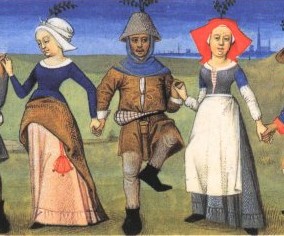


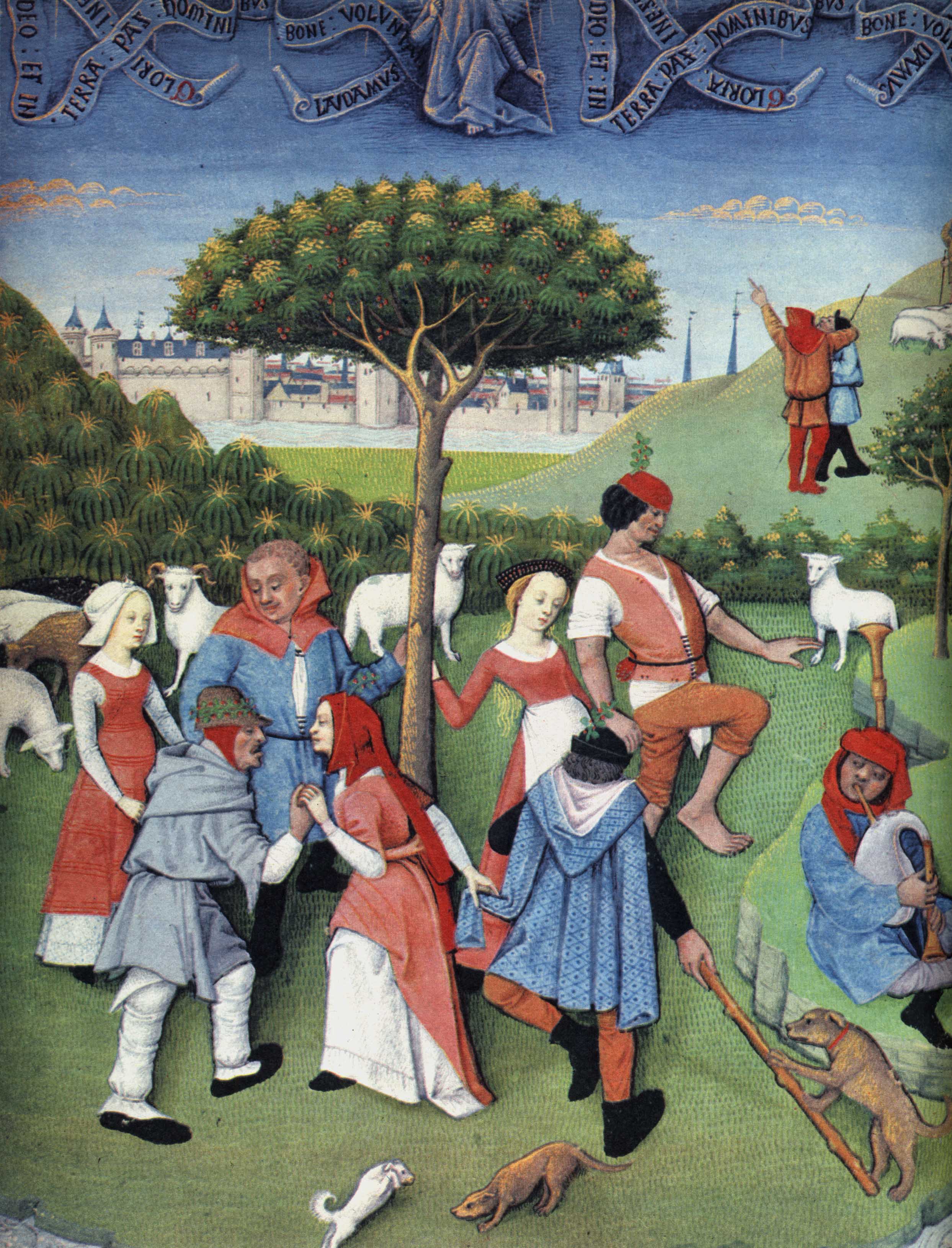

Notice.. there, on the under dress.. the ruffle at the bottom of the dress. I have -never- noticed that before.. and frankly I can’t think of a logical reason that’s there (well unless this is what they are replacing the bottom edge of the dress with when it gets worn.. or if it’s some weird reinforcement thing). I don’t see any examples where it’s in a different color from the dress fabric.. so that actually leads me to think that the ruffle is original to the dress, not added on later.
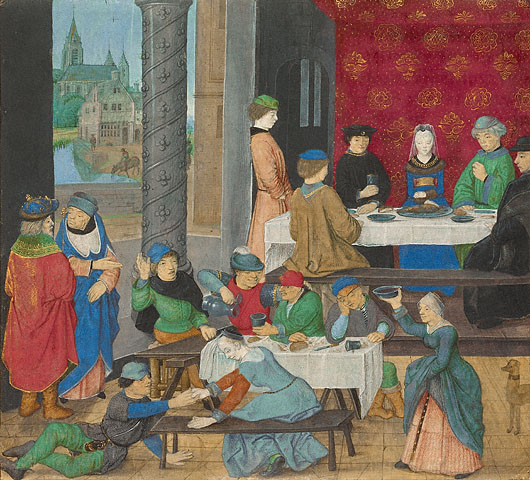
Just weird.
[Edited to add: I stumbed across this article on Facebook which is detailing a dress from a later time period, 1616, but has a similar “ruffle” which is described as a tuck in the dress material used to allow for growth spurts (in younger girls) and pregnancy(in older women).]
** As is tradition in the West, Sylvie la chardonnière is relatively persona-less. She is French.. and her surname, “chardonnière” implies that she is a “thistle seller”. She used to be firmly temporaly located in the 14th century. Lately she flouncing about a lot closer to 1535 and looking decidedly Landknecht-y.